


The ROCKWOOL Group is based in Bridgend, South Wales. It is the world’s largest stone wool manufacturer, trading in more than 120 countries. With over 80 years of innovation and industry experience, the company takes its name from the very product it manufactures: rock spun into a wool-like fibre known for its excellent insulating properties.
Because the market offers so many types of insulation, choosing the right one for your application can feel challenging. ROCKWOOL can be used on roofs, ceilings, lofts, and floors. In recent years, ROCKWOOL wall insulation has become popular, especially in cavity walls. This is because homeowners and tradespeople are using it instead of spray foam, which can cause unwanted moisture build-up leading to rot and mould, as well as little to no fire resistance, and even release nasty fumes. By choosing ROCKWOOL, you won’t need to worry about encountering any of these issues.
This guide explains what ROCKWOOL insulation is, shows where you can use it, and highlights the many benefits of installing it in your home, office, or business.
Table of Contents:
- What is ROCKWOOL made of?
- Is ROCKWOOL fireproof?
- Popular Ranges
- RW Slab
- ROCKWOOL Flexi Slab
- ROCKFLOOR
- ROCKWOOL Twin Roll
- ROCKWOOL Rollbatt
- How to Cut ROCKWOOL Insulation
What is ROCKWOOL made of?
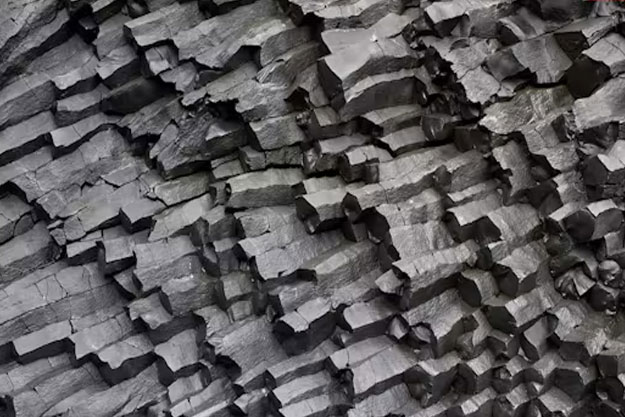
As the name suggests, ROCKWOOL is a type of mineral wool insulation. It is made from volcanic rock, which, when cooled quickly, naturally forms wool-like fibres. This process has been recreated on an industrial level by melting and spinning basalt and diabase. These igneous rocks both have a high but manageable melting point. The fibres trap air, thanks to the many air pockets formed amongst the strands. Air is a poor heat conductor, and therefore, heat transfer is slowed down, creating the foundation for modern insulation. This keeps buildings cool in summer, as it stops the heat passing inside, and warm in the winter, as it stops heat escaping.
Is ROCKWOOL fireproof?
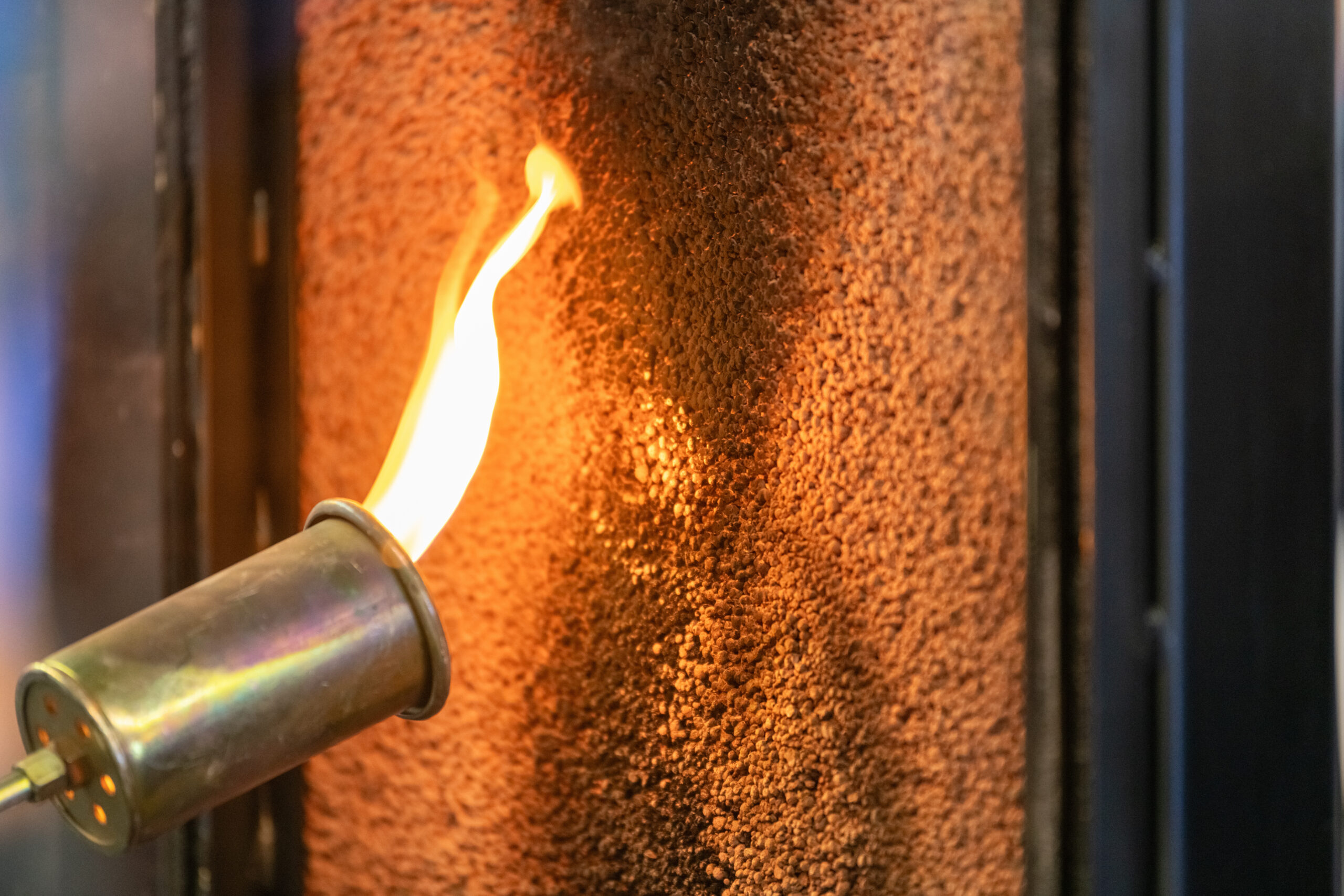
The short answer is yes. As explained in the section above, volcanic rock has an extremely high melting point: 1,000 degrees Celsius to be exact. Because of this, stone wool insulation does not melt below this temperature, making it a non-combustible material. This means the insulation will not burn or spread flames, allowing emergency services valuable time to contain any potential fires. ROCKWOOL products are rated A1 (non-combustible), A2 (limited combustibility), or d0 (no burning droplets). If you install ROCKWOOL A1 non combustile insulation in your home, you can be reassured when it comes to additional fire protection.
Popular Ranges
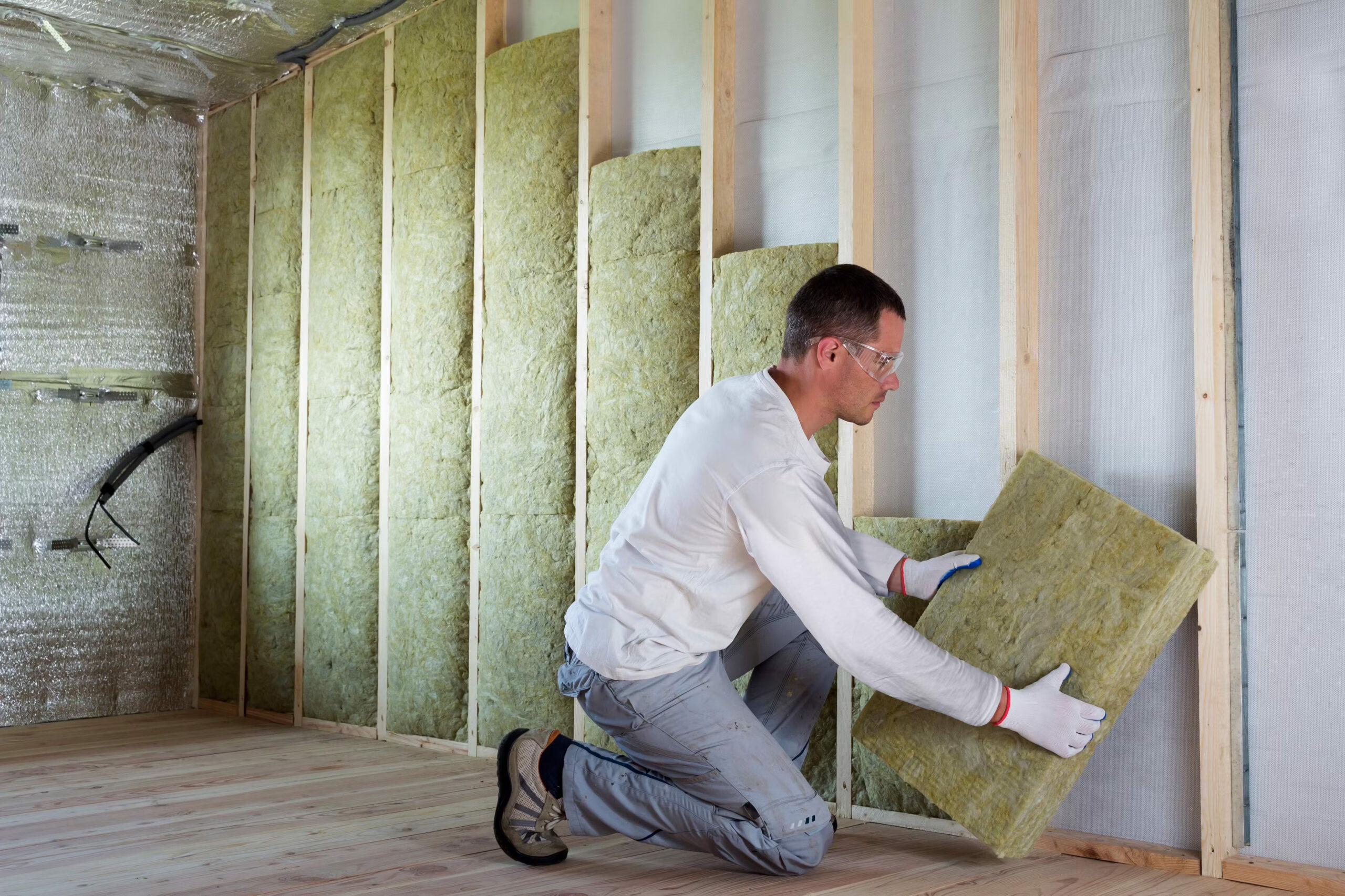
Below, you will find a list of the most popular types of ROCKWOOL insulation along with recommendations on where each type is best used. Additionally, we have broken down their key specifications so that they are easier to understand. However, if you need more technical details, you can always refer to the data sheets on individual product pages, which provide additional information that may be helpful depending on your specific application.
RW Slab
Versatile insulation slab suitable for use on a range of applications.
-
-
- 1200mm x 60mm
- Offers thermal, acoustic, and fire insulation
- Suitable for roofs, ceilings, walls, floors, and partitions
- A1 fire classification
- Facing options include either black or white non-woven mineral; or aluminium foil
-
| Product Name | Nominal Density (kg/m³) | Thermal Conductivity |
| ROCKWOOL RWA45 | 45 | 0.035 W/mK |
| ROCKWOOL RW3 | 60 | 0.034 W/mK |
| ROCKWOOL RW4 | 80 | 0.034 W/mK |
| ROCKWOOL RW5 | 100 | 0.034 W/mK |
| ROCKWOOL RW6 | 140 | 0.035 W/mK |
Of these, people installing insulation most often use either RWA45 or RW3. Specifically, RWA45 is lighter and more flexible, which makes installation easier, but it is not as solid. As a result, installers typically use it in areas with little to no load-bearing requirements. Because of its lower density, it is the cheaper of the two. In contrast, RW3 has a higher density and resists sagging, making it ideal for heavy-duty applications where stability and long-term performance are needed. Check out the RWA45 and RW3 ranges here.
ROCKWOOL Flexi Slab
Known for its flexible edge to ensure minimal gaps when installed.
-
-
- 1200mm x 600mm and 1200mm x 400mm sizes
- 50mm, 60mm, 90mm, 100mm, and 150mm thicknesses
- Offers acoustic and thermal insulation
- Has a flexible edge to fit securely to supporting framework
- Easy to install
- A1 fire classification
- Suitable for separating walls, separating floors, internal floors, partitions, timber-framed walls, and cavity walls
- U-values will vary depending on application
-
Check out the full Flexi Slab range here.
ROCKFLOOR
Designed specifically for floors due to its high density and impact noise reduction.
-
-
- Available in acoustic and thermal variations
- 25mm and 50mm thicknesses
- Suitable for thermal applications in ground floors, and acoustic applications in separating floors
- High resistance to heavy loads and pressure in a singular spot
- A1 fire classification
- Compatible with a range of installation methods
-
Check out the ROCKFLOOR range here.
ROCKWOOL Twin Roll
A pre-split, flexible loft insulation roll designed for quick and easy installation.
-
-
- 2750mm x 1200mm roll
- Available pre-split into two thicknesses of 100mm
- 100mm thickness to be used between rafters
- 200mm thickness to be used over rafters
- For use on roof and loft spaces
- A1 fire classification
- 0.044 W/mK thermal conductivity
-
ROCKWOOL Rollbatt
Loft roll insulation offering thermal and acoustic insulation designed to fit between standard joists.
-
-
- Available in pre-cut widths of either 3x 400mm or 2x 600mm
- Available in thicknesses of 100mm and 150mm
- Suitable for use in roofs and loft spaces
- Supplied in pallets
- A1 fire classification
- 0.044 W/mK thermal conductivity
-
The main differences between Rollbatt and Twinroll are: ROCKWOOL supplies Twinroll in pre-cut thicknesses, which makes installation quick and easy, especially in large loft spaces. In contrast, they supply Rollbatt in pre-measured widths for standard-sized spacings, while allowing you to cut different thicknesses when you need varying U-values. Check out ROCKWOOL loft insulation roll here.
How to Cut ROCKWOOL Insulation
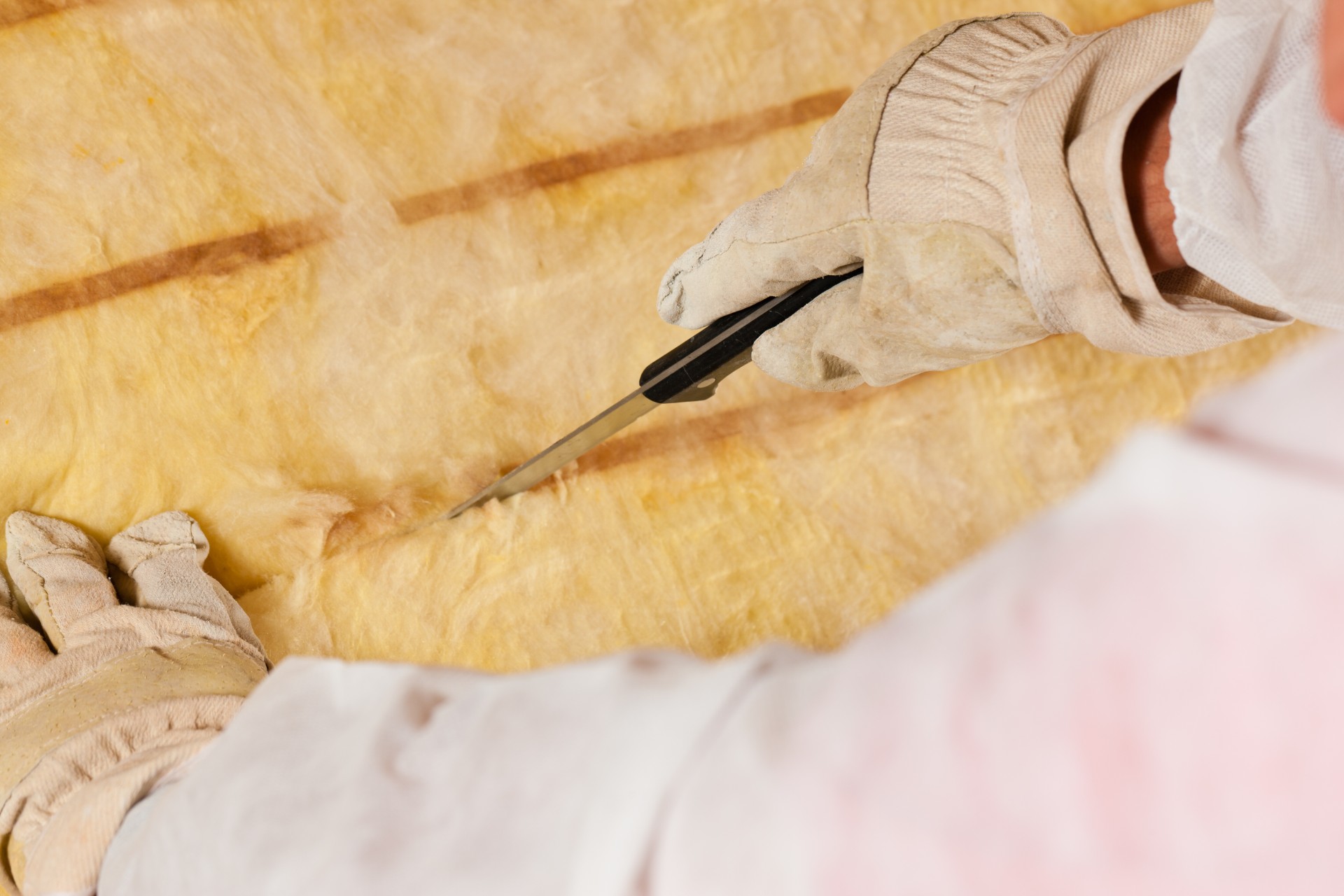
Not only is ROCKWOOL easy to install, but preparing it is also incredibly simple. For example, if you need to cut your insulation slab or roll, we recommend using a long-bladed knife. In addition, always make sure to wear the correct PPE when prepping and installing stone wool insulation. Although it is non-toxic, handling it can still cause micro-scratches or skin irritation because of the shape of the fibres. By taking these precautions, you can ensure a safe and smooth installation process.
Final Thoughts…
That wraps up the ROCKWOOL insulation products we stock here at Insulation Superstore. By now, you should have the confidence to choose the right type of insulation for your project. In addition, if you require more technical details, you can easily find them by checking the data sheets provided on specific product pages.
Was this guide useful?
Mentioned in this product guide:
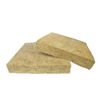
ROCKWOOL Flexi Slab Acoustic Insulation 1200mm x 400mm x 100mm - 86.4m2 Pallet
£1,074.00 Incl. VAT